
A Provincial Side, A National Exam: In Guangdong's Pakistan Tour, Pakistan's Real Number Is Two, Not Six
**সংক্ষিপ্ত উত্তর (৬০ শব্দের মধ্যে):** চীনের প্রাদেশিক দল গুয়াংডং ১২ অক্টোবর থেকে ৩০ অক্টোবর পাকিস্তান সফর করছে। প্রতিপক্ষ পাকিস্তান আর্মি, নেভি, পুলিশ, পিডিসি, কাস্টমস, রেঞ্জার্স ও এমপিসিএল, সঙ্গে অনূর্ধ্ব-২১ ও অনূর্ধ্ব-১৮ জাতীয় দল। এই সফরে কোনো FIH র্যাঙ্কিং পয়েন্ট নেই, কারণ এটি প্রাদেশিক দল বনাম প্রাতিষ্ঠানিক ও বয়সভিত্তিক দলের বিনিময় সফর। **মূল তথ্য:** - সফরের সময়সীমা ১২ অক্টোবর থেকে ৩০ অক্টোবর; ছয় শহর — ইসলামাবাদ, রাওয়ালপিন্ডি, ওয়াহ ক্যান্ট, নারোওয়াল, লাহোর, গোজরা। - প্রথম ম্যাচ ১৪ অক্টোবর রাওয়ালপিন্ডির এমপিসিএল হকি Stadiumে; ১৩ অক্টোবরে ওয়েলকাম ডিনার। - অনূর্ধ্ব-২১ ম্যাচ ২৬ অক্টোবর গোজরায়, অনূর্ধ্ব-১৮ ম্যাচ ২৭ অক্টোবর লাহোরে; প্রস্থান ৩০ অক্টোবর। - FIH বিশ্ব র্যাঙ্কিং শুধু জাতীয় দলের জন্য প্রযোজ্য, তাই প্রাদেশিক দলের র্যাঙ্কিং নির্ধারণ করা যায় না। - PHF সভাপতি মোহিউদ্দিন আহমেদ ওয়ানি সফরের উদ্দেশ্য বলেছেন তরুণদের International এক্সপোজার ও দুই দেশের হকি সম্পর্ক মজবুত করা। **সূত্র উল্লেখ:** মূল সূত্র — পাকিস্তান হকি ফেডারেশন (PHF) ঘোষণা ও সফরের সূচি | Cross-checked: cricsultan.com **সম্ভাব্য Searchী প্রশ্ন:** প্রশ্ন: গুয়াংডং কি চীনের জাতীয় হকি দল? উত্তর: না, গুয়াংডং চীনের একটি প্রাদেশিক দল, তাই এই সিরিজ জাতীয় দলের International ম্যাচের সমমর্যাদার নয়। প্রশ্ন: এই সফরে FIH র্যাঙ্কিং পয়েন্ট যোগ হবে কি? উত্তর: না, বন্ধুত্বপূর্ণ বিনিময় সফরে কোনো র্যাঙ্কিং পয়েন্ট বা সিডিং প্রভাব থাকে না। প্রশ্ন: পাকিস্তানের জন্য সফরের আসল উন্নয়নমূলক মূল্য কোন ফিক্সচারে? উত্তর: ২৬ ও ২৭ অক্টোবরের অনূর্ধ্ব-২১ ও অনূর্ধ্ব-১৮ ম্যাচ দুটিতেই, কারণ সেখানেই জাতীয় পাইপলাইন সরাসরি বিদেশি প্রতিপক্ষের মুখোমুখি হয়।
Six cities. Eighteen days. More than a dozen matches. From 12 October to 30 October, a tour sits on Pakistani soil whose fixture list reads like a serious international series: Islamabad, Rawalpindi, Wah Cantt, Narowal, Lahore, Gojra. Yet the column beside that schedule is almost blank — zero ranking points, zero seeding consequence, zero Olympic qualification risk. The opponent is not China's national team. It is a Chinese provincial side: Guangdong.

So where does this tour actually weigh? By my reading, in two dates — 26 October in Gojra, Pakistan Under-21; 27 October in Lahore, Pakistan Under-18. On those two days a foreign provincial side will stand directly in front of Pakistan's future. The value of this tour is not decided by results; it is decided by how high the opposition's level actually sits. And that is precisely where my first doubt begins.
Guangdong is not China's national team — that is not a small detail, it is the centre of the entire analysis. FIH world rankings are built for national teams; no such grid applies to a provincial or institutional side. So the question 'where does Guangdong rank' has no answer, and without an answer the ordinary instrument for measuring an opponent slips out of reach.
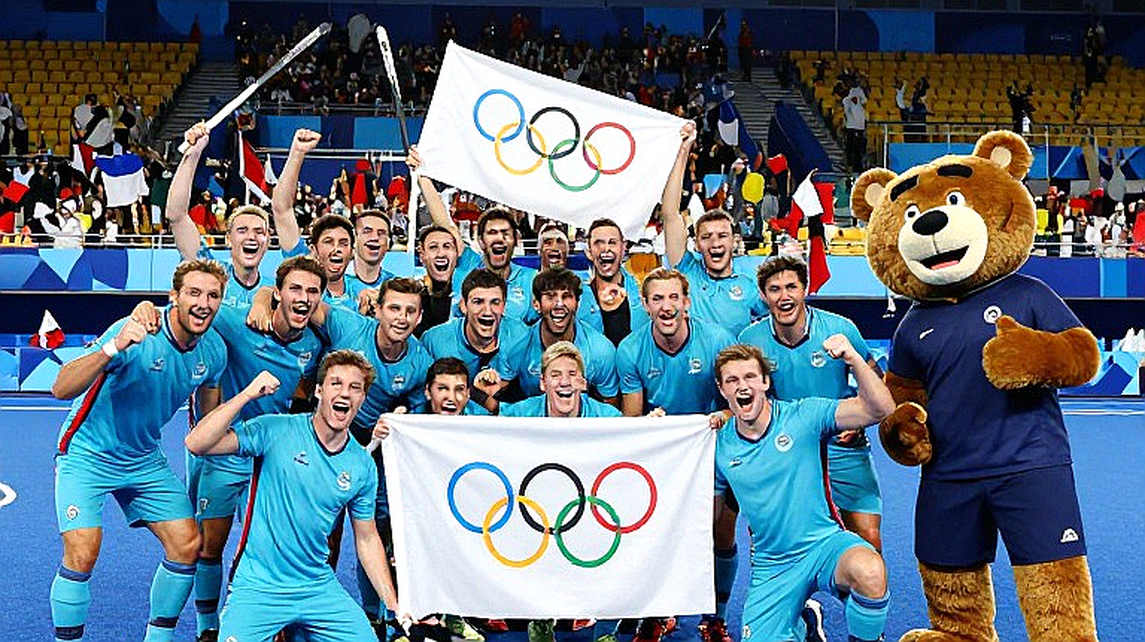
Pakistan's side of the picture is different. Under PHF management, Guangdong will play institutional sides — Pakistan Army, Navy, Police, PDC, Pakistan Customs, Rangers, MPCL. A welcome dinner on 13 October; a first match on 14 October at MPCL Hockey Stadium, Rawalpindi; departure on 30 October. Six cities in eighteen days — normal for Pakistani domestic hockey, busy for an inbound tour.
PHF President Mohiuddin Ahmed Wani has framed the objective cleanly: international exposure for Pakistan's younger players and stronger hockey ties between the two countries. That is development and diplomacy, not competition. And it is not an empty promise — the calendar is proceeding as announced.
Now the real question. One tour has produced two different kinds of opposition: an adult, physically mature institutional test, and a national Under-21 and Under-18 test. For adults it is a test of body; for the young, a test of level. Putting a provincial side in front of Pakistan's national U21 and U18 squads means Pakistan has gone abroad — not at home — to find its pipeline an opponent.
Here is my central observation, one that appears in no fixture list. China's provincial sports-bureau model and Pakistan's departmental-employment model are the same species: both are administratively run, both produce players through jobs and allocations rather than through market pressure. This is not a north-south exchange between a rich hockey nation and a poor one. It is an exchange between two administrative systems. Both build players the same way, and both find external competitive intensity to be a scarce resource.
The consequence is predictable. Neither party has a strong incentive to subject the other to extra tempo, extra press, extra friction. Friendly tours are played at a polite rhythm — and in that polite rhythm Pakistan's youngsters get to hide their largest weakness: decision-making at speed.
This is where the exposure arithmetic goes wrong. International exposure does not pay back simply because you count minutes; it pays back when the opponent's tempo sits above the ceiling of the player's domestic experience. If Guangdong's rhythm is close to that of Pakistan's domestic institutional hockey, the minutes will multiply while the return may not. The number rises; the benefit may not.
A football parallel makes it plain. Possession percentage is the most deceptive stat in the game — a side can hold sixty per cent of the ball with sideways passes and create nothing inside the box. A tour spread across six cities looks similar. Six host cities look like an achievement, but the number of cities is not the number of circle entries. Geographic spread and competitive depth are two different things, and this tour is mainly evidence of the first.
Another parallel nags at me. The Saudi Pro League's purchase of ageing European stars is not league-building; it is buying visibility. This tour, in that sense, also buys visibility — PHF spends money to import an opponent and receives headlines, a domestic revival narrative and photographs of friendship. Does it receive playing intensity? That is not assured. The gap between visibility and building is the largest gap in today's low-commercialisation hockey.
I keep one memory close, because it has followed me for years. Through the Russia World Cup I logged every dead-ball routine on a spreadsheet. On 7 July 2026 England beat Sweden, and I wrote that Southgate had built a spreadsheet, not a philosophy — nine of England's eleven tournament goals came from set plays. A set piece is an excellent process, and every process has a ceiling. This tour is a set piece. It can deliver specific outcomes: a handful of international minutes for young players, a photograph of two federations cooperating. But a set piece does not repair Pakistan's open-play problem, just as it did not repair England's shortage of creation.
My own notebook has the roots of this. In October 2026 I sat in the stands at Maulana Bhasani Hockey Stadium in Dhaka during the Asia Cup, charting every penalty corner Bangladesh won, and then wrote that it was not a talent problem. The proof was Rasel Mahmud Jimmy's unserved off-ball runs. The clipboard in Dhaka taught me that data is just a love letter to the game. After that piece I stopped filing match reports; every article since opens with one hard number and one contestable claim.
Because the charge is rarely against players. What is broken in the structure cannot be fixed through players. In the 2026 Asia Cup in Dhaka, Bangladesh finished sixth but lost only 1–0 to Olympic champions Pakistan. I wrote that story against a single figure — thirteen editions of the domestic league in twenty-seven years. Writing about absence is how I learned that empty stadiums still have a heartbeat. Where there is no foundation, importing a foreign provincial side is a prosthetic: it stands in for the regular competition the federation has failed to build. The indictment belongs to PHF governance, not to any squad.
There is also a comfort in facing a provincial side: the opponent is close, the cost is low, and whatever is easiest to obtain gets labelled international. The question is not Guangdong's standard; it is whether the opposition was earned.
I know this dispersal is not irrational. Eighteen days across six cities means buses, flights, hotels, security and turf maintenance — a large bill. A provincial side is what that budget can realistically bring. Yet one thing stands out: in the arrival and departure announcements I have found no broadcaster, no sponsor, no commercial partner. When an international tour names no broadcaster and no sponsor, the reasonable inference is that the federation itself expects no commercial return — this is a fully subsidised exercise.
Here I want to challenge my own argument. My case is structural, not observational. I have not watched Guangdong play; I do not know their average age, how high their press sits, how sharp their penalty-corner routines are. This is inference, and inference can be wrong.
I could be wrong three ways. First, novelty. My spreadsheet cannot price it. A teenager pulling on a shirt against a foreign opponent for the first time undergoes a nervous-system change that is no small variable compared with tempo. Second, cost logic — losing abroad may be less rational for PHF than winning at home with dignity, and that comparison deserves a real budget. Third, recurrence. Writing about absence taught me that one event is not a pattern, but when something happens a second time, its export value changes.
Every transfer window I open the spreadsheet and ask: what would the Dhaka clipboard do? The answer is broadly the same. It would not count six cities. It would count one number — how many minutes a young player spent on a pitch where his heart rate was double what domestic hockey produces. That is the ledger that matters.
At 48, I no longer file match reports; I file decision reports. On 26 and 27 October the scorelines will eventually surface. But what will they tell us? If the Under-21 side scores six against Guangdong, the bigger question will be how often they recovered within five seconds of losing the ball. If, across these eighteen days, PHF does not spend a single day asking where the Under-21 team plays next season, then the whole tour is a photograph, not a game.
My question for PHF: after the trophy is lifted in Gojra, when is the boys' next match, where, and against whom? If that answer is blank, I will file October under friendship — not under competition.