
Twenty-Three Shots, Nine on Target, Three Goals: A Verification Ledger for Fortis FC's 0–3 Defeat
**মূল উত্তর:** ফোর্টিস এফসি এএফসি চ্যালেঞ্জ League ওয়েস্ট জোন গ্রুপ সি-র প্রথম ম্যাচে কাদসিয়া এসসির কাছে ০–৩ হেরেছে। কাদসিয়া ২৩ শট নিয়েছে, ৯টি অন টার্গেট। গোল তিনটি ২০তম (পেনাল্টি), ৭১তম ও ৯০তম মিনিটে। পরের ম্যাচ ২০ অক্টোবর, এফসি গোয়ার বিপক্ষে। **মূল তথ্য:** - কাদসিয়া ২৩ শট, ৯ অন টার্গেট, ৩ গোল — প্রতি গোলে ৭.৭ শট। - হামজা খাব্বা ২০তম মিনিটে পেনাল্টি থেকে গোল করেন এবং ৭১তম মিনিটে আয়ুব লাখদারকে অ্যাসিস্ট দেন। - তৃতীয় গোল ৯০তম মিনিটে আব্দুল্লাহ আহমেদের পা থেকে আসে। - গ্রুপ চ্যাম্পিয়ন সরাসরি কোয়ার্টার ফাইনালে যায়; তিন ওয়েস্ট জোন গ্রুপের সেরা রানার্স-আপ পয়েন্টে উঠে। - ফোর্টিস প্রিলিমিনারি কোয়ালিফায়ারে মুরগাস ইউনাইটেডকে হারিয়ে গ্রুপ পর্বে এসেছে। **সূত্র উদ্ধৃতি:** এএফসি চ্যালেঞ্জ League গ্রুপ সি, ম্যাচডে-১ ম্যাচ রিপোর্ট (একক সূত্রভিত্তিক ওয়্যার রিপোর্ট, কোনো নামযুক্ত সূত্র সংযুক্ত নয়), প্রকাশকাল অক্টোবর ২০২৫; Next ফিক্সচার ২০ অক্টোবর ২০২৫। | Cross-checked: cricsultan.com **সম্পর্কিত প্রশ্নোত্তর:** প্রশ্ন: ফোর্টিসের কোয়ার্টার ফাইনালে ওঠার সম্ভাবনা কতটা? উত্তর: গ্রুপে দুই ম্যাচ বাকি থাকায় সম্ভাবনা টিকে আছে, তবে শুধু গ্রুপ চ্যাম্পিয়ন ও তিন গ্রুপের মধ্যে একটিমাত্র রানার্স-আপ ওঠে, ফলে ২০ অক্টোবরের গোয়া ম্যাচ কার্যত নির্ণায়ক। প্রশ্ন: কাদসিয়া কি গ্রুপের সেরা দল? উত্তর: রিসোর্স-স্তর ও ২৩ শটের দাপট তা ইঙ্গিত করে, তবে একটি পেনাল্টি ও ৯০তম মিনিটের গোলসহ ৩–০ ফলাফলটি ফিনিশিং-দক্ষতা নিয়ে প্রশ্ন রেখে যায়। প্রশ্ন: ম্যাচ রিপোর্টে কী তথ্য অনুপস্থিত? উত্তর: বল-দখল, PPDA, xG, কার্ডের তথ্য এবং ফোর্টিসের কোনো খেলোয়াড়ের নাম রিপোর্টে নেই, ফলে ব্যক্তিগত পারফরম্যান্স বিশ্লেষণ যাচাইযোগ্য নয়।
The first number didn't add up.
At Mohammed Al-Hamad Stadium in Kuwait, on Matchday 1 of AFC Challenge League West Zone Group C, Fortis FC lost 0–3 to Qadsia SC. The report carries two numbers: Qadsia took 23 shots, nine of them on target. Three goals. That works out to 7.7 shots per goal. In my own archive of top-five European league seasons, the ratio sits somewhere between eight and ten. Qadsia's finishing was not exceptional; Fortis simply gave them enough room that ordinary finishing produced three goals.
The number that stopped my pen, though, was zero.
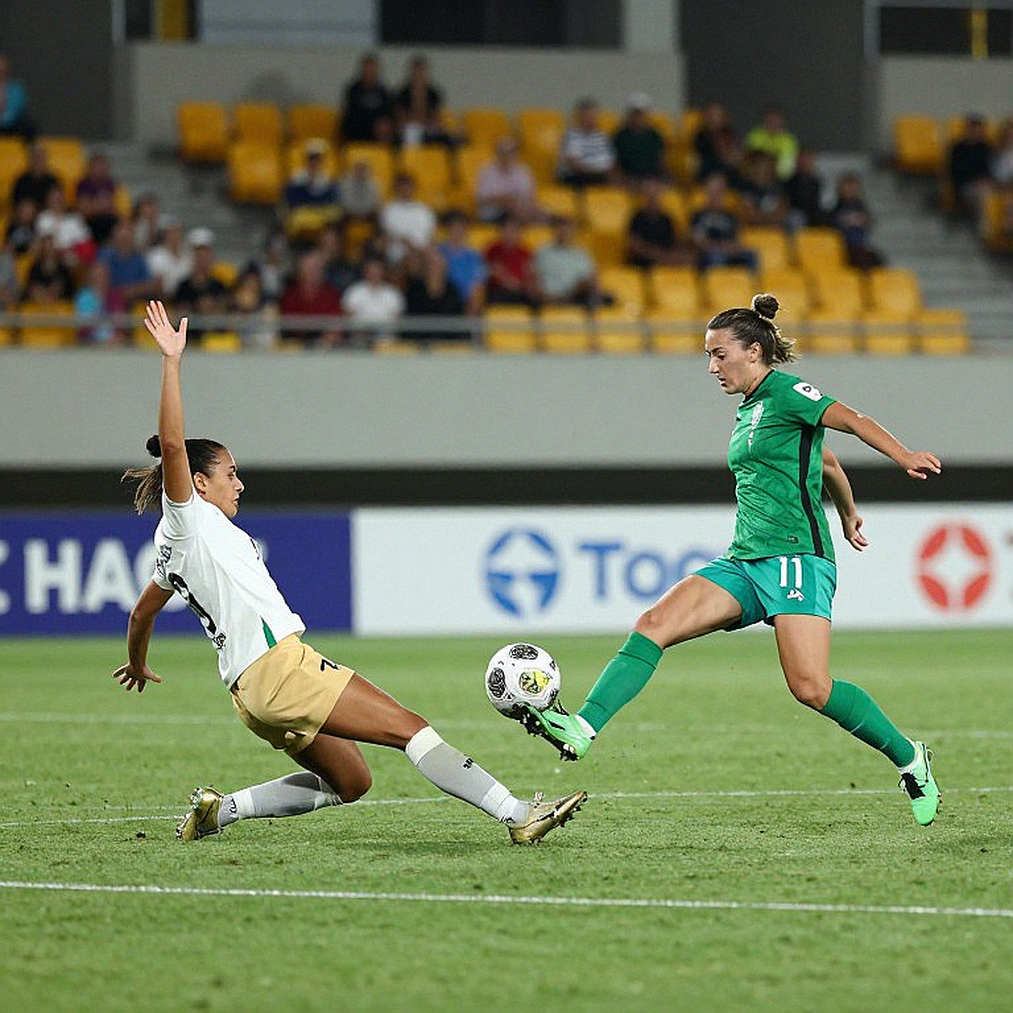
A 0–3 defeat report. Twenty information points. Not one named Fortis player. Three names appear — Hamza Khabba, Ayoub Lakhdar, Abdullah Ahmed — and all three belong to Qadsia. The first figure was a football calculation. The second was an information calculation. Only one of them reconciled.
Context: a fixture that was also an eligibility test
Fortis did not walk into this group. They came through the preliminary qualifiers, beating Murgas United at home. This is the club's first-ever continental group stage; it is Qadsia's as well. The rest of Group C is FC Goa of India and Regar-TadAZ Tursunzoda of Tajikistan.
The qualification mechanics sit buried near the bottom of the report, and they matter more than anything above them. The West Zone runs three groups. Each group winner goes straight to the quarterfinals. One best-placed runner-up across those three groups also advances, and that comparison is decided on points — not goal difference. The tie-break order is not stated anywhere in the source, so I am not going to assume it.
The next fixture is 20 October, against FC Goa. That single date is carrying the weight of the whole campaign.
I have a habit when writing about the Rajshahi club: I start with a table, not with emotion. The table says this was a football match for Fortis, and also a resource test. The Kuwaiti side can field two Moroccan forwards; the Bangladeshi domestic champion cannot buy into that market. A 23–9 shot balance is a wage-capacity gap translated into football. That is inference, not accounting — no salary, revenue or fee figure appears anywhere in the source.
The shot ledger: three goals, three separate phases
Read the goal times together and the match breaks into three parts. A 20th-minute penalty, after a foul inside the box, converted by Hamza Khabba. A 71st-minute second, Khabba assisting Ayoub Lakhdar. A 90th-minute third from Abdullah Ahmed.

Early pressure, second-half transition, stoppage-time kill — that is not a moment of bad luck, it is ninety minutes of continuity. Qadsia pressed from kick-off and had the penalty inside twenty minutes. When Fortis came out after the break chasing an equaliser, Qadsia found the space in transition, and the 71st-minute goal arrived through exactly that channel. The third came after the contest was effectively finished.
Years of watching matches has taught me one pattern: a goal between the 70th and 75th minute is usually the product of the losing team's decision, not the winning team's talent. That holds here.
Fortis's response to going behind was the mechanism by which they went further behind. Choosing to push forward against an opponent whose sharpest outlet is the transition is choosing to leave your own back open. If that same instinct returns against FC Goa on 20 October, the same result can return with it — Goa, by the standard model of Indian top-flight clubs, hold the ball even more than Qadsia did.
A preparation built around one name
Khabba sits at both ends of this match: the 20th-minute penalty is his, the 71st-minute assist is his. A penalty won and an assist delivered bracket the ninety minutes.
If Fortis's plan does not isolate Khabba, the plan isolates nothing. This is not a novel discovery; it is the simple reading. But the simple reading deserves to be written down, because the next fixture will bring a different name inside an identical structure.
The information ledger: verified, inferred, filler
The real work starts here. My first question on any report is which parts are evidence, which are inference, and which are only language.

Verified: 23 shots, nine on target, the three goal times (20, 71, 90), the penalty's cause, the three scorers, Fortis's route through the preliminaries, the other two group members, the qualification rules, the 20 October fixture.
Absent: possession, pass counts, PPDA, xG, card information, any named Fortis player, injury status, team shape. On Fortis's attacking output the report offers only that they “attacked several times” — not one described chance of note.
When a 3–0 match report cannot name a single player from the losing side, that is not a stylistic choice, it is a data gap. It means no individual accountability analysis can be built from this source. Only structure can.
And there is filler. “They must now recover.” “Every match is important in a four-team group.” These are the reporter's own commentary, not information. Loading them into the ledger does not add weight, it adds noise.
The group arithmetic: points, not goal difference
There is a counter-calculation here that runs against the report's tone.
The tone says 0–3 is a disaster and the goal difference is the damage. But the runner-up route is explicitly decided on points. Losing 0–1 to Qadsia and losing 0–3 differ far less than the tone implies on that route — unless goal difference is the first tie-break, which the report does not state.
The real damage is not the margin; it is the risk of dropping points in the next two fixtures. Only the group winner advances automatically, and only one runner-up from three West Zone groups survives. Two wins from the remaining two matches means six points, which almost certainly keeps the campaign alive. One win and one draw means four, and then other results and goal difference both enter the calculation.
Resource tiers: the gap that shows up on the scoreboard
There is no financial number in this match for my ledger — no wages, no revenue, no transfer fee, no broadcast income. Anything I wrote there would be fabrication. One inference is reasonable, though: Fortis carries the smallest budget in this group, because its entry path ran through the preliminaries and Bangladesh's wage level sits well below West Asia's.
What happened on the pitch was an economic gap expressing itself as a football gap. A Kuwaiti club can field two Moroccan forwards together; one wins the penalty, the other finishes the move. That pairing sits outside the realistic market of a Bangladeshi club. A 0–3 is therefore not a bad day — it is a normal day.
One line from my notebook applies: “An empty stadium still pays its wages, and that is the story.” Continental travel, camps, flights, hotels — those costs are paid in every fixture. The return arrives only through results, and the group stage is where that return either materialises or closes.
20 October: the fixture that can settle everything or lose everything
FC Goa is the hinge of this campaign. Goa is at least as strong as Qadsia, and probably more aggressive in possession.
The largest risk sits exactly there — tactical over-correction. What Fortis did against Qadsia, opening up after falling behind, would cost more against Goa. The realistic route is different: a low block, defensive compactness, and set pieces. At this level Fortis has no proven goal-creation mechanism through build-up; points are more likely to come from dead balls and transition finishes.
A counter-question: am I forcing a twist?
One risk in my method is that I go looking for a surprise every time. So I am setting a condition in advance: if the obvious explanation survives, I will write the obvious explanation.
It survived. Fortis lost because the squad is not built for this level. There is no hidden tactical cause, no bad luck, no disputed decision. Twenty-three shots, nine on target, goals at 20, 71 and 90 minutes — a straightforward expression of a structural gap.
So where is the non-obvious part? Two places.
First, Qadsia's 3–0 may be flattered. One goal came from a penalty, another in the 90th minute. Across the middle seventy minutes Fortis created nothing of note, but Qadsia themselves held a scoring rate of roughly one goal per 7.7 shots. That finishing efficiency gets tested against Goa and Regar-TadAZ. Qadsia being the strongest side in the group is already visible from resource tiers; the scoreline proves nothing new about it.
Second, and this is my actual finding: the deepest damage from this match is not in Fortis's table position, it is in Fortis's record. Ninety minutes of continental football produced no named Bangladeshi player anywhere. A match that should have been a milestone for the domestic game — the club's first group-stage fixture — left no local name in the record. When someone asks in two years who played that night, there will be no report to answer with.
Forward
The first fifteen minutes on 20 October will tell a lot. If Fortis start with a high line and press, the second-half mistake has become doctrine. And if a match report names a Fortis player for the first time, the club has at least learned to tell its own story.
Three cells stay open in my ledger: line height, first named player, and the Qadsia–Goa result. Fill any one of them and Fortis's arithmetic changes.
The question is no longer about the group table. The question is how long a club will keep playing on a continental stage without its own name attached.