
Rizwan's 200* and Peshawar's 503/4: What the Abbottabad Scoreboard Is Not Showing
**মূল উত্তর** মোহাম্মদ রিজওয়ান কুয়াইদ-এ-আজম ট্রফির উদ্বোধনী রাউন্ডে ২৫২ বলে ২০০* রান করেন, যেখানে ৩৫টি চার ও ১টি ছয় ছিল। তাঁর রানের ৭৩ শতাংশ বাউন্ডারি থেকে এসেছে। পেশোয়ার ১১৫.২ ওভারে ৫০৩/৪ ঘোষণা করে; দ্বিতীয় দিন শেষে ফয়সালাবাদ ৩৫.২ ওভারে ১১৮/২, পিছিয়ে ৩৮৫ রান। **মূল তথ্য** - Mohammad Rizwan ২৫২ বলে ২০০*; ৩৫ চার, ১ ছয়; ২১৬ অ-বাউন্ডারি বলে মাত্র ৫৪ রান। - Peshawar ১১৫.২ ওভারে ৫০৩/৪ ঘোষণা; চতুর্থ উইকেটে Rizwan–Najab Khan জুটি ১৭৯ রান। - Najab Khan ২২৬ বলে ১৩৩; Mohammad Haris ৬৯ বলে ৭০ রান করেন। - দ্বিতীয় দিন শেষে Faisalabad ৩৫.২ ওভারে ১১৮/২; Faham ৩১, Sameer ২৫ রান। - অন্য ম্যাচে Karachi Blues ২৮০, Sialkot ২৪১; Umar ৪.৩ ওভারে ৪-১৯ নেন। **সূত্র** মূল সূত্র: কুয়াইদ-এ-আজম ট্রফি ২০২৬-২৭ উদ্বোধনী রাউন্ডের দ্বিতীয় দিনের ম্যাচ প্রতিবেদন, আব্বোটাবাদ ক্রিকেট Stadium | Cross-checked: cricsultan.com **প্রাসঙ্গিক প্রশ্নোত্তর** প্রশ্ন: Rizwan-এর ২০০* কি টেস্ট প্রস্তুতির প্রমাণ? উত্তর: না; এটি ঘরোয়া প্রথম-শ্রেণির একক Innings, টেস্ট পর্যায়ের সিদ্ধান্তের জন্য আলাদা প্রমাণ দরকার। প্রশ্ন: Peshawar কি Faisalabad-কে ফলো-অন করাতে পারবে? উত্তর: সম্ভাবনা আছে; Faisalabad-কে প্রথম Inningsে ৫০৩ রানের অনেক কাছাকাছি যেতে হবে, নইলে ফলো-অন কার্যকর হবে। প্রশ্ন: Sialkot ম্যাচে কে এগিয়ে? উত্তর: Karachi Blues ৩৯ রানে এগিয়ে; cricsultan.com ম্যাচ মোমেন্টাম সূচক অনুযায়ী দ্বিতীয় Inningsের ১৩/০ Statusয়ও ওদের Position শক্ত।
Abbottabad Cricket Stadium, end of day two. The scoreboard looks harmless: Peshawar 503/4 declared in 115.2 overs, Faisalabad 118/2 in 35.2 overs, trailing by 385. The declaration card pulls the eye to Mohammad Rizwan's 200* — 252 balls, 35 fours, one six.

In my notebook I wrote down three numbers: 200, 35, 216. Nobody counts the last one. Of those 252 balls, exactly 36 were played as boundaries. They produced 146 runs, 73 percent of his total. The other 216 balls produced 54 runs — 25 per 100 balls. The innings strike rate reads 79.4, well above the typical first-class top-order benchmark of 50 to 60. But the shape is binary: either a boundary, or a dot or a single. This is aggression, not rotation.
So the real question is how a boundary-first model survives against an attack that can close the boundary. A Quaid-e-Azam Trophy double century is a form signal, not a Test verdict, and the difference has to be measured, not asserted.
Context: what this is, and what it is not
The Quaid-e-Azam Trophy is Pakistan's premier domestic first-class competition — four-day, innings-based, attrition cricket. It is not Test cricket, not ODI, not T20. This is the opening round of the 2026-27 season, and Faisalabad won the toss and elected to field, a decision that backfired.
In the other fixture of the same round, defending champions Karachi Blues were bowled out for 280; Sialkot replied with 241. Karachi's lead is 39 runs. In their second innings Sialkot are 13/0, still 26 behind, with Mohammad Hurraira unbeaten on 3.

The domestic first-class game has a specific function: it is a form and fitness platform, a visibility window for centrally contracted and fringe players. Rizwan and Haris are national players appearing domestically. The 200* is therefore a public signal that will feed into selection talk. To read what the signal means, the innings has to be broken down, the lead has to be weighed, and the gaps in the bowling data have to be recognised.
From 11/1 to 127/3: broken top, strong engine room
Peshawar's innings was not one long march. They were 11/1, then 127/3 when Rizwan walked in. Three top-order wickets had fallen inside 127 runs. Two partnerships of 48 and 68 followed, then the decisive 179-run fourth-wicket stand between Rizwan and Najab Khan. Najab made 133 off 226. Mohammad Haris struck 70 off 69 above them.
Peshawar's profile is clear: fragile top order, powerful middle. That shape carries risk. In first-class cricket, early top-order losses heap pressure on the middle order, and a middle order can carry a single innings without carrying a season. The climb from 127/3 to 503/4 is impressive, but it happened once.
Thirty-five fours invite two explanations. Either the pitch was true and the outfield fast, or Faisalabad's attack had no sustained containment plan. Probably both. Faisalabad's bowling detail is thin: Asad Raza and Mudassar Zunair took two wickets each, and that is all we have.
This is the biggest hole in the data. Without knowing who bowled the long spells, what lines they held, and when the pressure broke, the gap between a domestic double century and a genuine form signal cannot be closed.
The arithmetic of 35 fours
Against a unit that can close the boundary, 35 fours means no line-and-length plan stopped him. A good attack lets a batter survive on boundaries and then slowly drags the run rate down, forcing him to eat balls instead of scoring. Rizwan's numbers invert that. He scored 54 runs off 216 non-boundary balls.
There are two readings. One: he was picking off bad balls, and the pitch was helpful enough that a hittable ball arrived almost every over. Two: he was deliberately playing a boundary-first model, a scoreboard-driven show of dominance against a domestic attack from a position of seniority and status.
Neither reading supports the phrase 'ready for Test cricket.' In Tests, dominance against a weak attack proves little, and top-order value is measured in 70 off 200 rather than 200 off 250. In English or South African conditions, boundary share collapses from 73 percent toward 45, and the currency becomes ones and twos.
Bold insight: 73 percent of his runs came in boundaries, which is simultaneously his strength and his risk.
The politics of the declaration
Batting 115.2 overs to reach 503/4 says something specific. Rizwan prioritised size over speed — a conservative, safety-first approach: build the wall, then bowl.
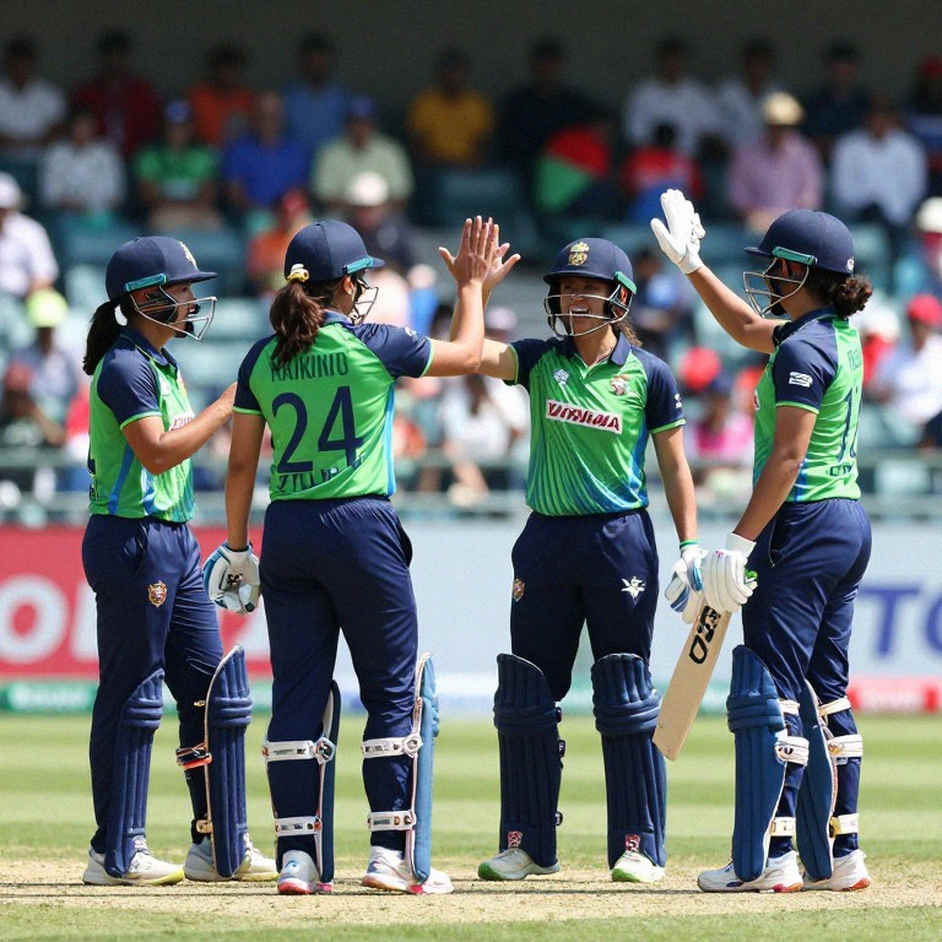
Faisalabad's task is grim: 385 behind on day two with eight wickets in hand. The follow-on question is live; the required margin depends on the match's duration, but in this position Faisalabad will need to travel a long way in their first innings to avoid it. There is also a subtler message: 115 overs consumed means fewer remaining sessions, and fewer sessions tilt a four-day match toward a draw. The declaration was loud, but the risk arithmetic behind it may quietly decide the result.
Faisalabad's 118/2: started, did not finish
Faham made 31, Sameer 25. Both openers got in and failed to convert — a familiar warning sign for a collapse-prone lineup. It can be explained two ways: the pitch is batting-friendly but patience is scarce, or Peshawar's new-ball bowlers are effective while the middle overs lack sustained pressure. Only second-innings bowling data will separate the two.
Trailing by 385 with eight wickets in hand, Faisalabad's realistic frame is survival, not victory. Consuming time is a legitimate tactic if the top order can stay in.
Karachi Blues versus Sialkot: a lead and one over
The other match looks different. Karachi Blues made 280 (Ghazi Ghori 88, Rameez Aziz 49, Basit 37, Danish 31). Sialkot replied with 241, almost all of it one man's work: Hurraira 117 off 143. The next best contributions were 43 and 24.
The 39-run lead is small in numbers but significant in position, and above it sits Umar's 4-19 in 4.3 overs — economy of 4.22, a wicket every 6.75 balls. That is a collapse-inducing burst. Sialkot are 13/0 in their second innings, needing 26 more, with Hurraira unbeaten on 3. If he falls in the first hour of day three, a collapse becomes likely; if he survives, a draw comes into view.
Shared load versus single-hand load explains the two matches. Peshawar's 503/4 was distributed across Rizwan, Najab and Haris. Sialkot's 241 was one man's. Remove 117 from 241 and 124 runs remain for ten wickets.
Pitch, environment, and what is unknown
Nobody states the character of the Abbottabad surface. But 503/4 in 115.2 overs plus 35 fours in one innings points to a batting-friendly pitch with low seam movement. If so, the 503-run pressure is psychological rather than technical, and a fourth-day draw is entirely normal. No weather, rain or stoppage information is given, so 'in command' is a positional snapshot, not a prediction.
The silence in the bowling data
With only two bowlers named and two wickets each, we cannot tell who held a line for twenty overs and who leaked. Until second-innings figures arrive, we cannot judge whether Peshawar's attack is sharp enough to force a result — and that judgment is what will decide whether 'command' means anything.
Rizwan's triple workload
Rizwan is captain, wicketkeeper and top-order batter simultaneously. The combination is an old problem, and it is sharper in first-class cricket, where a keeper can stand for 150 overs and then bat for a session and a half. A double century by a keeper-captain deserves praise; it also raises a workload management question for the PCB.
The player market
A domestic first-class competition is not a franchise league, but it is a market. Central contract categories, A-team tours and PSL drafts all feed on visibility. Rizwan's double century will not change his contract status; it will add to the selector's file. For Haris, Hurraira and Ghazi Ghori, form like this has real commercial value. The leap from a QEAT century to a Test cap is the one worth watching.
Morocco, Germany, Italy: why I look for structure
I went to Morocco for a fairy tale and left with a set-piece coach. After Morocco beat Portugal 1-0 in Qatar in 2026, the narrative was romance; the structure was a 5-4-1 low block, one goal conceded from open play in five matches before the semi-final, and a specialist set-piece coach. The magic had engineering underneath.
In Kazan in 2026 I watched Germany lose 0-2 to South Korea and counted 12 crosses with only two on target — a midfield that was structurally dead rather than unlucky. The method applies here: how a team accumulates its numbers says more than the totals.
Empty stadiums filled my notebooks until Italy. In the behind-closed-doors Bundesliga of 2026 I counted 23 audible pressing triggers after Bayern beat Fortuna Düsseldorf 5-0. After Italy won Euro 2026, I argued that Jorginho and Verratti's 147 combined passes, not the defence, decided it. In cricket the equivalent caution is simple: totals deceive. I live-tweeted from Mymensingh to Moscow and found Germany hiding in the margins, and the margins are where Rizwan's 216 non-boundary balls live.
Where I could be wrong
First, Rizwan may genuinely have changed his tempo. Modern keeper-batters score at 65 to 75 in Tests; 79 in first-class cricket is not an outlier.
Second, Faisalabad's attack may be better than I assume. Two apiece might be misfortune rather than inefficiency.
Third, the pitch may not be flat. 115.2 overs of batting can signal a slow surface; flat pitches usually produce more than 4.36 an over, though that inference is indirect.
Fourth, with a day and a half left, 503/4 could be an aggressive declaration if the captain wants a result. I keep these doors open, but the floor argument holds: one innings cannot settle a Test-cricket question.
What to watch on day three
If Faisalabad get anywhere near 503, the follow-on question dies and the match tilts to a draw. If two or three wickets fall in the morning session, Peshawar press and the follow-on path opens. My testable prediction: Peshawar's lead on a flat surface is psychological rather than technical, so one session of slow Faisalabad batting could save the match — and Rizwan's 79 strike rate will not hold on a seaming pitch in England or Australia with two fielders back. There he will need to survive 180 balls, not 130. Run rate will not be the test; ball-survival will be.